In short
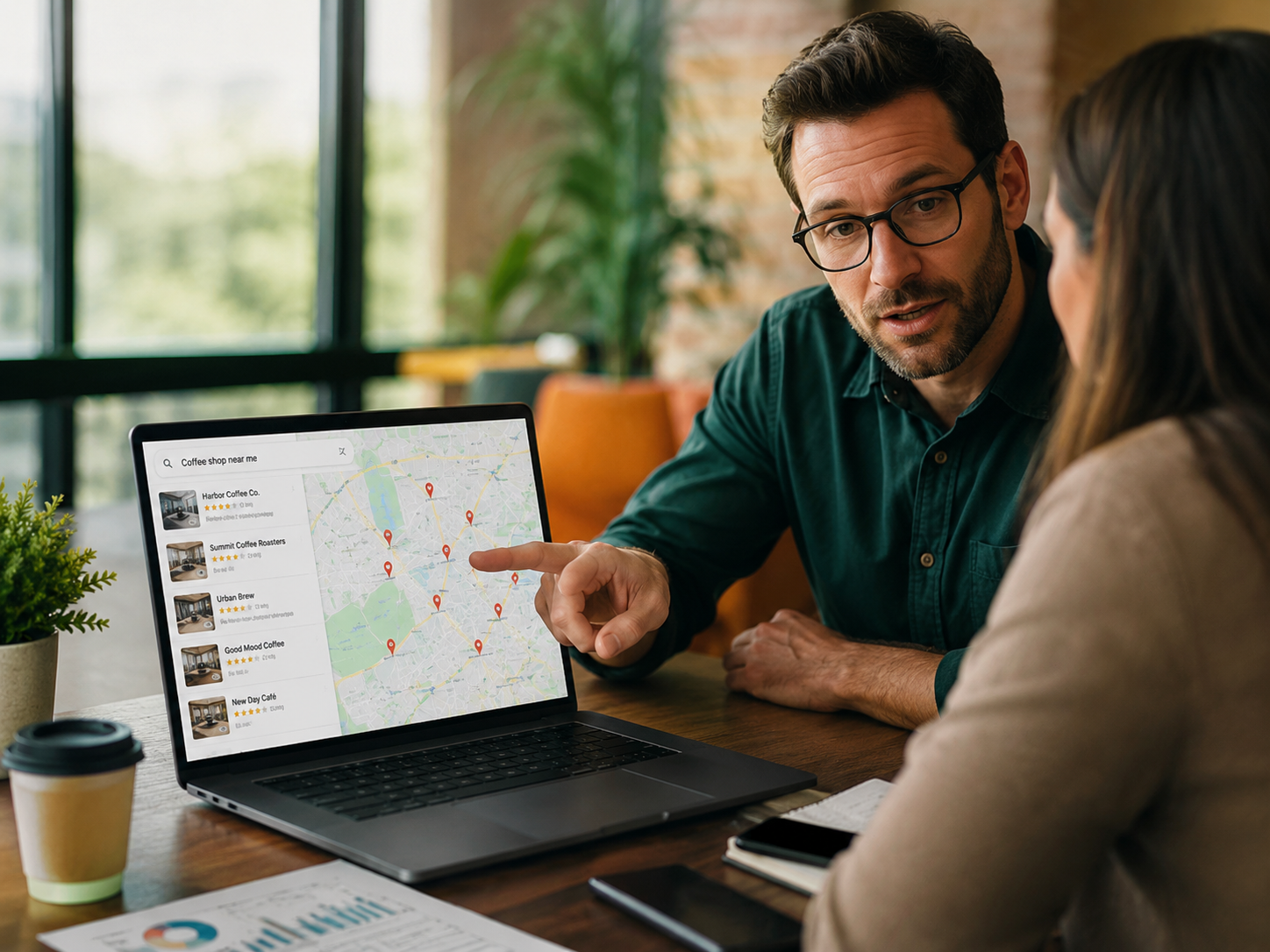
Local SEO helps businesses get leads by making them visible at the exact moment a nearby buyer is searching — inside the Google Map Pack, on Google Maps, in 'near me' results and on AI assistants when a buyer asks for a local recommendation. The core levers are a fully optimised Google Business Profile, consistent NAP citations, genuine reviews, location-specific landing pages, and local link signals.
Why local SEO is the highest-intent channel for service businesses
When someone searches 'plumber near me' or 'family dentist in Austin', they are not browsing. They are buying. Local SEO captures that intent at the bottom of the funnel — the moment between problem and purchase — which is why it consistently produces a lower cost per lead than nearly any paid channel for service businesses.
The five levers that actually move local rankings
Local rankings are decided by relevance, distance and prominence. You can influence all three.
- A fully optimised Google Business Profile with services, photos, posts and Q&A
- Consistent NAP (Name, Address, Phone) across 40+ trusted directories
- A steady, genuine review flow with thoughtful responses
- Location and service landing pages with unique local content
- Local backlinks and citations from chambers, media and partners
Google Business Profile: the single biggest lever
Your GBP is your storefront on Google. The brands that win the Map Pack treat it like a living asset: complete every field, add new photos weekly, publish GBP posts, answer questions, list every service with a description, and keep hours accurate. Small consistent activity outperforms big one-off optimisations.
Reviews: the trust signal that compounds
Reviews influence both rankings and conversion. The brands that win make review collection a system — a follow-up SMS or email after every job, a simple review link, and a public, thoughtful response to every review (positive or negative). Quantity matters; recency matters more; sentiment matters most.
Location pages done properly
If you serve five cities, you need five distinct, well-written location pages — not a copy-paste template with the city name swapped. Each page should reference local landmarks, neighbourhoods, projects or clients (where appropriate), embed a unique map, and link to relevant service pages. Thin or duplicated location pages will sink rankings rather than help them.
How AI search is changing local discovery
Buyers increasingly ask AI assistants for local recommendations. Those answers pull from Google Business Profile data, review platforms, structured data on your site, and third-party listicles. The brands that show up in AI assistants have invested in clean structured data, a strong review profile, and earned media mentions — not just GBP.