In short
The retail chain improved both ecommerce revenue and local store discovery. Customers could find the right products faster, while the business gained clearer insight into online and offline demand.
The challenge
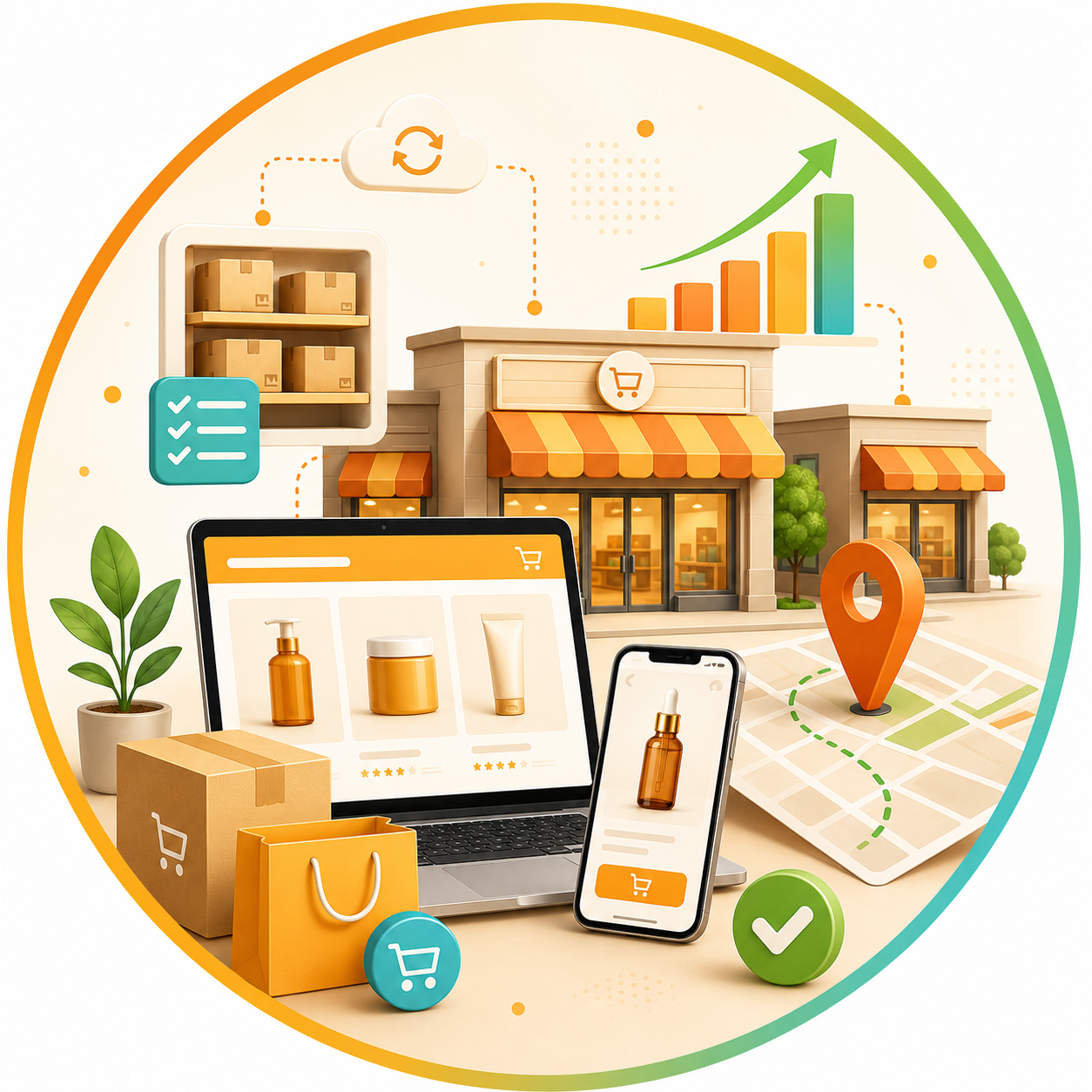
A retail chain with multiple stores wanted to connect online demand with in-store and ecommerce sales. The website had product listings, but inventory was not clearly presented, store pages were weak, and paid campaigns were sending traffic to generic pages. Customers could not easily find product availability by location.
The Marketer Zilla strategy
Marketer Zilla created a strategy that connected ecommerce, store visibility, local SEO, and product feed performance. The project focused on product-category pages, store pages, local inventory messaging, Google Ads tracking, and conversion-friendly product discovery.
Key actions
- Improved product category pages with buying intent content and internal links.
- Created optimized store landing pages for each retail location.
- Structured product feeds for shopping campaigns and local inventory visibility.
- Improved product filters, search, and mobile product discovery.
- Set up conversion tracking for online purchases, store calls, directions, and contact forms.
- Created retargeting audiences for product viewers and abandoned carts.
Achievements
• Online revenue: CAD 61,000/mo → CAD 154,000/mo
• Store direction requests: 1,140/mo → 2,980/mo
• Paid conversion rate: 2.2% → 5.6%
• Cost per acquisition: CAD 52 → CAD 29
• Category page organic traffic: 8,300 → 19,700
Final outcome
The retail chain improved both ecommerce revenue and local store discovery. Customers could find the right products faster, while the business gained clearer insight into online and offline demand.
Key takeaways
- A clear digital growth system beats scattered tactics.
- Measurement and tracking turn marketing spend into pipeline.
- Website experience changes compound with SEO and paid media.